Must Hear Tracks: “Little Dark Age” “When You Die” “Hand It Over”
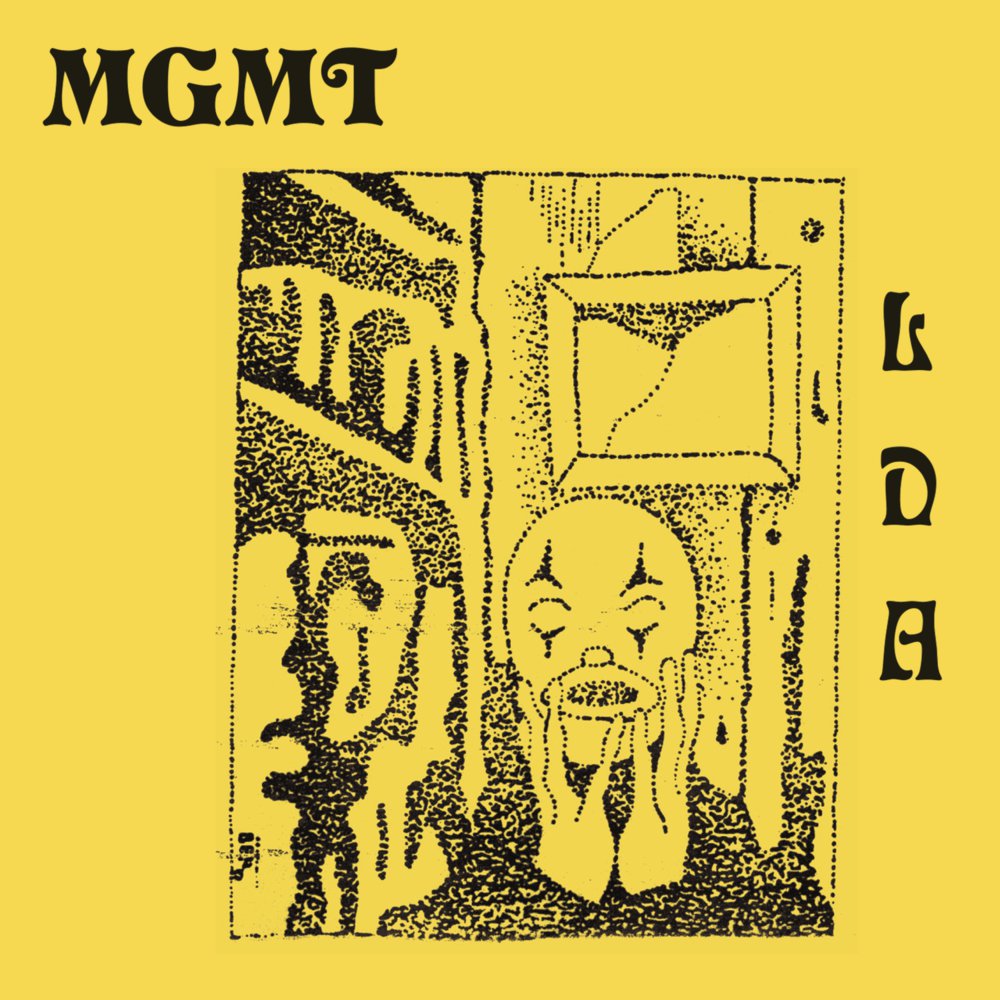
MGMT was an accident. At their first show, Andrew VanWyngarden and Ben Goldwasser played the Ghostbusters theme for 45 minutes straight. If that doesn’t prove they didn’t take themselves seriously, I don’t know what does. Their most successful songs were music student pranks, meant to pervert pop music rather than replicate it. They didn’t plan for fame, and they sure as hell didn’t expect the band to make it to 2018. But fame found them, regardless of their initial expectations. The fact that their parody songs earned them a contract with Columbia isn’t their fault, and the fact that they signed the paper should come as no surprise. What independent musician wouldn’t jump at the opportunity to live out the same rockstar dreams that they initially mocked? So, in 2006 MGMT started living out the same fantasies that “Time to Pretend” chronicled. The ensuing albums were hit-or-miss. Oracular Spectacular (2007) was a beautiful mess of modern psych-pop that exhumed childlike wonderment. Congratulations (2010) was a 60s-inspired opus punctuated by frazzled skepticism. The directionless MGMT (2013) radiated cynicism and confusion. Now, after a five year break, Little Dark Age (2018) juggles disenchantment and hope.
For a band that built a career on scatterbrained lyrics, Little Dark Age is startlingly consistent. From a relationship, doomed because “She Works Out Too Much”, to the concept of “forgetting who you are, for what you stand to gain”, and on to “laughing with you when you die”, MGMT present varying degrees of hopelessness. The epidemic of smartphone addiction is playfully covered on “TSLAMP,” which ends with the voice of the phone confidently asserting that its owner will always come crawling back, no matter how hard they try to break the habit. This thread of modern disenchantment is contradicted by characters that symbolize a light at the end of the tunnel. Michael is “solid as they come” and “the door is always open” for James. “One Thing Left to Try” tempers the hopelessness further: “I don’t wanna die / wishing I’d done something / more than what’s required,” VanWyngarden pleads, resiliently. Smartphones may be possessing our lives, the darkness may be trying to overtake humanity, but MGMT are not going quietly into the night. They repeatedly juxtapose endurance and death, wrestling with the decision of whether to quit or keep going. Vanwyngarden poses the question, “which door do we open?” on “Hand it Over” but the thread of hope is strong enough to imply that they have chosen to endure. On Little Dark Age, things are mostly doom and gloom, but the key word is “mostly.” After all, it’s just a little dark age.
While the thematic cohesion of Little Dark Age is a paradigm shift compared to their past work, MGMT seem to have lost most of their compositional dynamism. Little Dark Age is the most subdued MGMT album to date, and it takes some of the spark away from an otherwise impressive release. The appeal of MGMT’s earliest work was rooted in outrageous studio effects and playful musical turns, which are absent here. Musical originality and unpredictability have been traded for comparatively straightforward 80s-style synth-pop. This isn’t a surprising development, considering MGMT originated as a collaboration between two synth nerds. What’s most discouraging is that the schticky and melodramatic vocals seem to be an extended Ariel Pink reference. I understand seeing his fingerprints on “When You Die,” which he co-wrote, but it sounds like he manhandled the whole project. Its saddening to see a band that once proudly demonstrated brash musical experimentation make such a sonically predictable album, but it might just be a sign that they’re mellowing out with age .
Compositional shortcomings aside, Little Dark Age is MGMT’s most urgent and culturally relevant album. Their sound has come full circle, returning to the simple synth-pop that they concocted in 2004. Back then they were just college kids with no expectations, and no idea that their fantasy pop star anthem would become reality. Fast forward 14 years, and we see a band that has weathered higher expectations than most and is still trucking along. Little Dark Age may use some of the same hardware as their earliest tracks, but none of the same themes remain. VanWyngarden and Goldwasser paint a nuanced picture of disenchantment tempered by hope indicative of a band that has grown up. They discuss death and endurance with poise. There is less cynicism here, and no evidence of their long-held fascination with the trials and tribulations of fame. If their track record is any indicator, I think they will endure. The Alien Days are gone. MGMT are back in control, and back to square one.
Sources:
Genius.com. Guardian Article, 2010. Rolling Stone Article, 2018. Info on MGMT’s first EP. Uproxx Article, 2018. New York Times Article, 2010.
 The Healthy Alternative
Leave a comment